Event Dashboard — Art Direction
Centralized event dashboard that provides a clear, high-level overview of event performance while enabling efficient ticket management. The dashboard surfaces essential ticketing metrics upfront, supports internal-only notes for staff communication, and offers quick-access controls to advanced event management tools. Designed as the primary workspace for managing live events, the dashboard streamlines daily operations and ensures both internal staff and clients can take informed action with minimal friction.
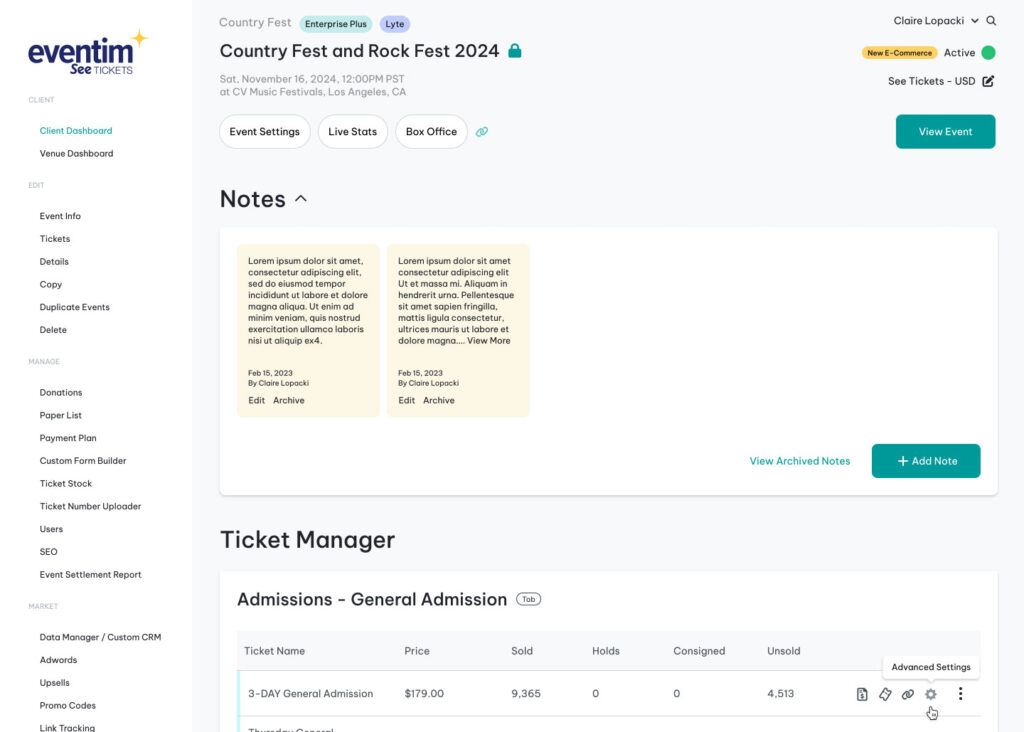
Floating Action Buttons, Notes and Ticket Manager
Floating action buttons at the top of the page ensuring high-value tasks are instantly reachable upon page load, reducing navigation time, improving workflow efficiency, and supporting quicker task execution across the dashboard.
Notes section enables internal staff to efficiently capture, reference, and manage key account or event-related information. This feature ensures quick access to relevant context, supports operational accuracy, and maintains confidentiality by allowing authorized users to add, edit, and delete notes that are never exposed to clients.
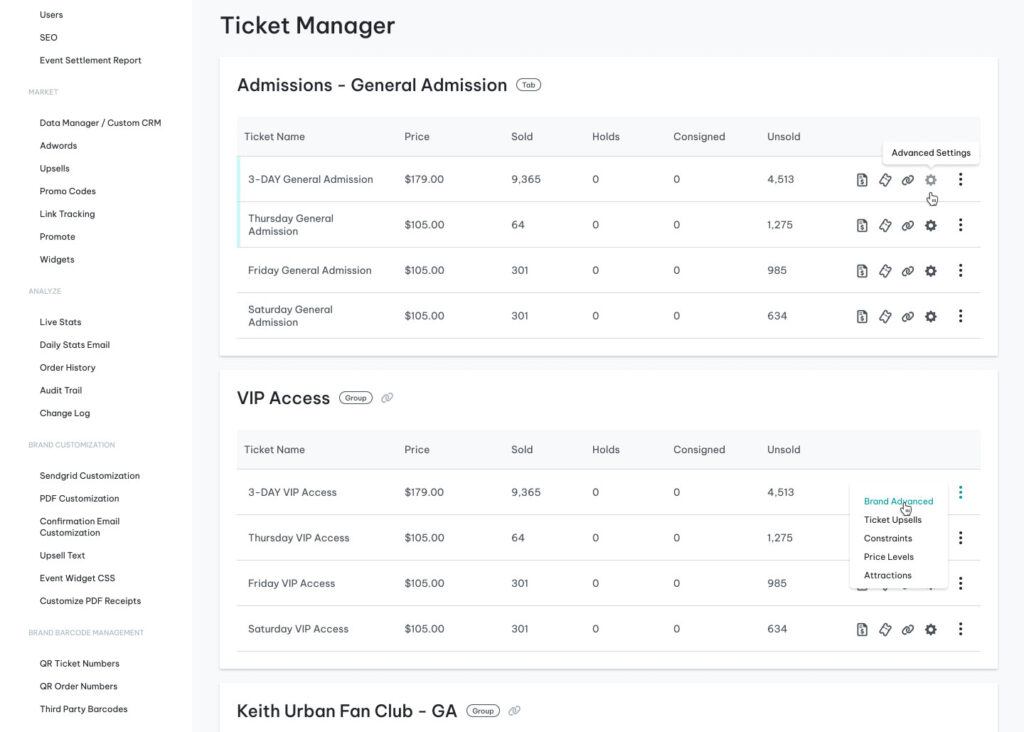
Ticket Type Management
An above-the-fold Ticket Manager that provides clients and internal staff with immediate, high-level visibility into key ticketing metrics for each ticket type. The section presents essential information—such as ticket types, pricing, tickets sold, and status—in a clean, tabled layout that enables fast scanning and informed decision-making. This quick-access view serves as a launch point for deeper ticket management tools, supporting both operational efficiency and real-time event oversight.
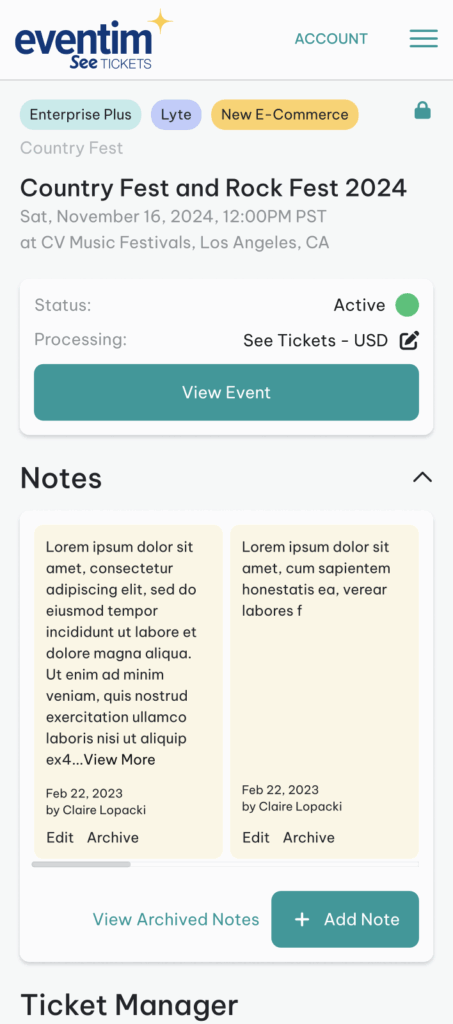
Mobile View
Although this dashboard is primarily designed for desktop-based administrative workflows, a streamlined mobile experience is provided to ensure essential visibility and access on the go. The mobile version prioritizes quick consumption of key event data—such as ticket metrics and internal notes—through a simplified, responsive layout optimized for smaller screens. While it does not replicate the full depth of desktop functionality, it enables users to stay informed and perform interactions when they’re away from their primary workstation.